
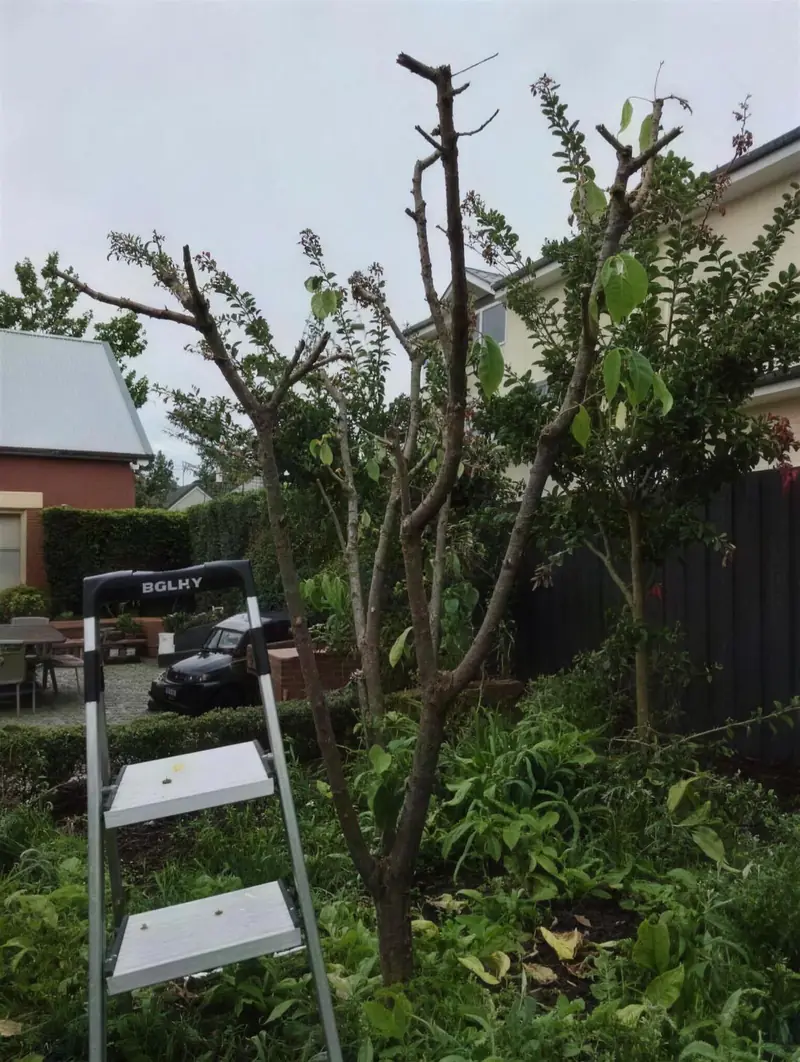
Most of the fruit trees I prune in Adelaide's eastern suburbs have been cut at the wrong time of year, usually because someone had a free Saturday in October. The tree survives, but the crop does not. Here is the calendar I work to for fruit tree pruning in Adelaide, with the reasoning, so you can do the light work yourself and know when to call me for the rest.
The rule that covers most of it
Deciduous fruit trees are pruned when they are dormant or just after they have finished fruiting; evergreen fruit trees are pruned lightly after the frost risk has passed. Stone fruit are the exception that catches people out: they are pruned in late summer, not winter, to keep bacterial canker and silver leaf out of the fresh cuts while the sap is still moving.
June and July: pome fruit and grapes
Apples, pears, quinces and nashi are pruned while fully dormant. Take out dead, diseased and crossing wood first, open the centre so air and light get in, and shorten last season's leaders by about a third. Spur-bearing apples are tidied, not hacked; most of the fruit forms on two-year-old wood. Grapes are cut back hard to two or three buds per spur on an established framework. Figs can be pruned now too, though they need little.
August: olives, pomegranates and the last of the dormant work
Finish any pome fruit you missed before bud burst. Olives are pruned now to open the canopy; they fruit on last year's growth, so do not strip every young shoot. Pomegranates get dead wood and suckers removed. This is also the last month to prune roses and Crepe Myrtles in the same garden.
September and October: hands off
Blossom and new growth. Pruning now removes the crop. The only cutting I do in spring is formative pruning on newly planted trees and removing frost-damaged tips once the risk has passed.
November to January: citrus, and summer pruning for size control
Citrus (lemons, limes, oranges, mandarins) are pruned lightly after the last frost and after the main flush, usually late spring: remove dead wood, water shoots below the graft and anything touching the ground. Keep the skirt lifted so fruit stays clean. Apples and pears that are getting too big can be summer pruned in December by shortening vigorous new shoots, which checks growth without stimulating the regrowth that a winter cut would.
February and March: stone fruit
Apricots, plums, peaches, nectarines and cherries are pruned straight after harvest while the weather is dry. Fresh cuts heal quickly in the warmth and the trees are far less likely to pick up the fungal and bacterial diseases that get into winter cuts in Adelaide's wet months. Peaches and nectarines fruit on one-year-old wood, so remove the wood that has fruited and keep the new growth. Apricots and plums fruit on spurs; thin and tidy, do not strip.
April and May: clean up and plan
Remove mummified fruit, rake and bin fallen leaves from any tree that had leaf curl, brown rot or black spot, and note which trees need major work in winter. If a tree has not been pruned in years, the restoration is staged over two or three winters rather than done in one brutal cut.
The one mistake to avoid
Lopping: cutting every branch back to a stub to make the tree smaller. The tree responds with a mass of weak, vertical regrowth, shades itself out, and fruits less. Size is controlled by selective thinning and summer pruning, not by decapitation. If a fruit tree is genuinely too big for its spot, that is a conversation worth having before the saw comes out.
Need it done properly?
I prune fruit trees across Norwood, Magill, Campbelltown, Athelstone, Burnside and the rest of Adelaide's eastern suburbs. See the tree pruning page or request a quote, and tell me what varieties you have so I can time the visit correctly.